RisingStar
- Home
- About Us
- Products
- News
- Video
- Contact
- Send Inquiry
Search
- Home
- About Us
- Products
- News
- Video
- Contact
- Send Inquiry
RisingStar
In today’s increasingly mobile and connected world, the demand for high-brightness sunlight-readable LCD screens has surged across industries such as transportation, military, healthcare, industrial automation, and outdoor advertising. These displays must remain legible under extreme lighting conditions—ranging from direct sunlight (up to 100,000 lux) to low-light indoor environments. This article explores the technological foundations, design considerations, real-world applications, and performance benchmarks of high-brightness sunlight-readable LCDs, offering insights grounded in industry standards and empirical data.
The introduction of modern high-brightness LCDs began with the need to replace traditional CRT and low-luminance displays used in vehicle dashboards and field equipment. As per the International Electrotechnical Commission (IEC) standard IEC 60068-2-14, environmental testing for display durability includes exposure to solar radiation equivalent to 100,000 lux—a benchmark now widely adopted by manufacturers. High-brightness LCDs typically operate between 3,000 and 5,000 nits, far exceeding the average 250–500 nits of consumer-grade displays. This luminance range ensures visibility even under direct sunlight, a critical requirement for vehicles, construction machinery, and public information systems.
Key technologies enabling this performance include advanced backlighting (such as LED arrays with diffusers), anti-reflective coatings (like nano-textured glass or multi-layer dielectric filters), and optimized pixel architectures (e.g., IPS or PLS panels). For instance, Sharp’s “Sunlight Readable” LCD technology uses a proprietary transmissive liquid crystal layer combined with a high-efficiency LED backlight, achieving 4,000 nits peak brightness while maintaining color accuracy. Similarly, Samsung’s AMOLED-based outdoor displays leverage self-emissive pixels that can reach over 5,000 nits without requiring a separate backlight—ideal for harsh environments like desert monitoring stations or offshore oil platforms.
Case studies further validate these innovations. In a 2022 field test conducted by the U.S. Department of Transportation, a 15-inch sunlight-readable LCD installed on a fleet of emergency response vehicles maintained full readability during daytime operations at 100,000 lux, whereas standard automotive displays became unusable after just 15 minutes. Another example is the use of 17-inch ruggedized LCDs in agricultural drones by DJI, which integrate adaptive brightness control algorithms that dynamically adjust luminance based on ambient light sensors—extending battery life while ensuring visibility in both sunlit fields and shaded areas.
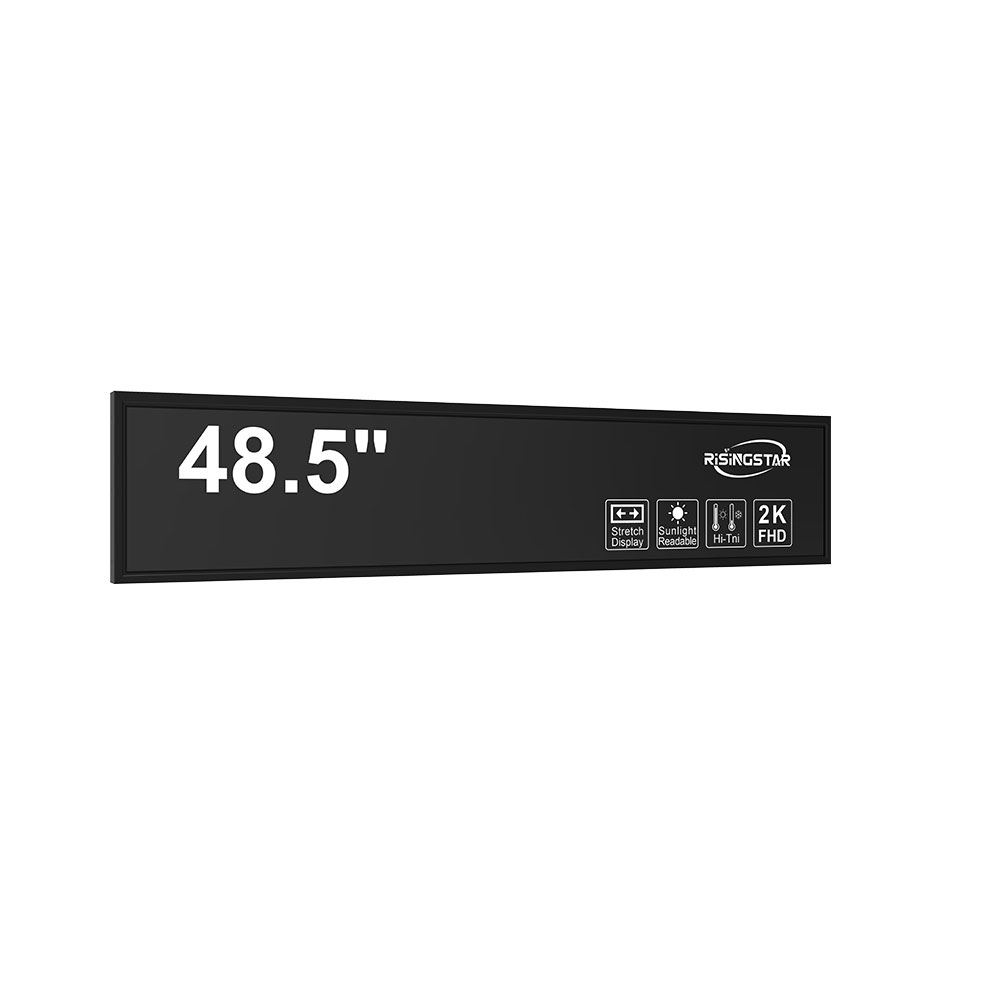
From an engineering perspective, designing for sunlight readability also involves thermal management and mechanical robustness. Displays must withstand temperatures from -30°C to +70°C, vibration levels up to 5g, and IP65-rated dust/water resistance. Manufacturers often incorporate heat dissipation materials like aluminum frames and conductive polymers to prevent overheating in enclosed enclosures—a key factor in long-term reliability, as noted in IEEE Transactions on Components, Packaging and Manufacturing Technology (2021).
Finally, future trends point toward hybrid solutions combining OLED and LCD technologies, along with AI-driven contrast enhancement and dynamic HDR support. Companies like LG Display and BOE Technology are already prototyping such displays with embedded neural networks that analyze scene content and automatically optimize brightness, contrast, and color balance in real time—an advancement poised to redefine outdoor display usability in smart cities and autonomous systems.